Contemporary
Floor, space, and falling lines
Contemporary technique borrows from ballet and modern roots while privileging momentum, floor contact, and unpredictable pathways through the room.
Qualities to notice
- Spiral — Torso and pelvis rotate off a vertical axis, often while legs stay grounded.
- Release — Weight drops through joints instead of holding every shape at peak tension.
- Direction — Facings change quickly; the eyes can lead the rest of the body into the next facing.
- Phrase length — Ideas stretch across counts rather than resolving on every downbeat.
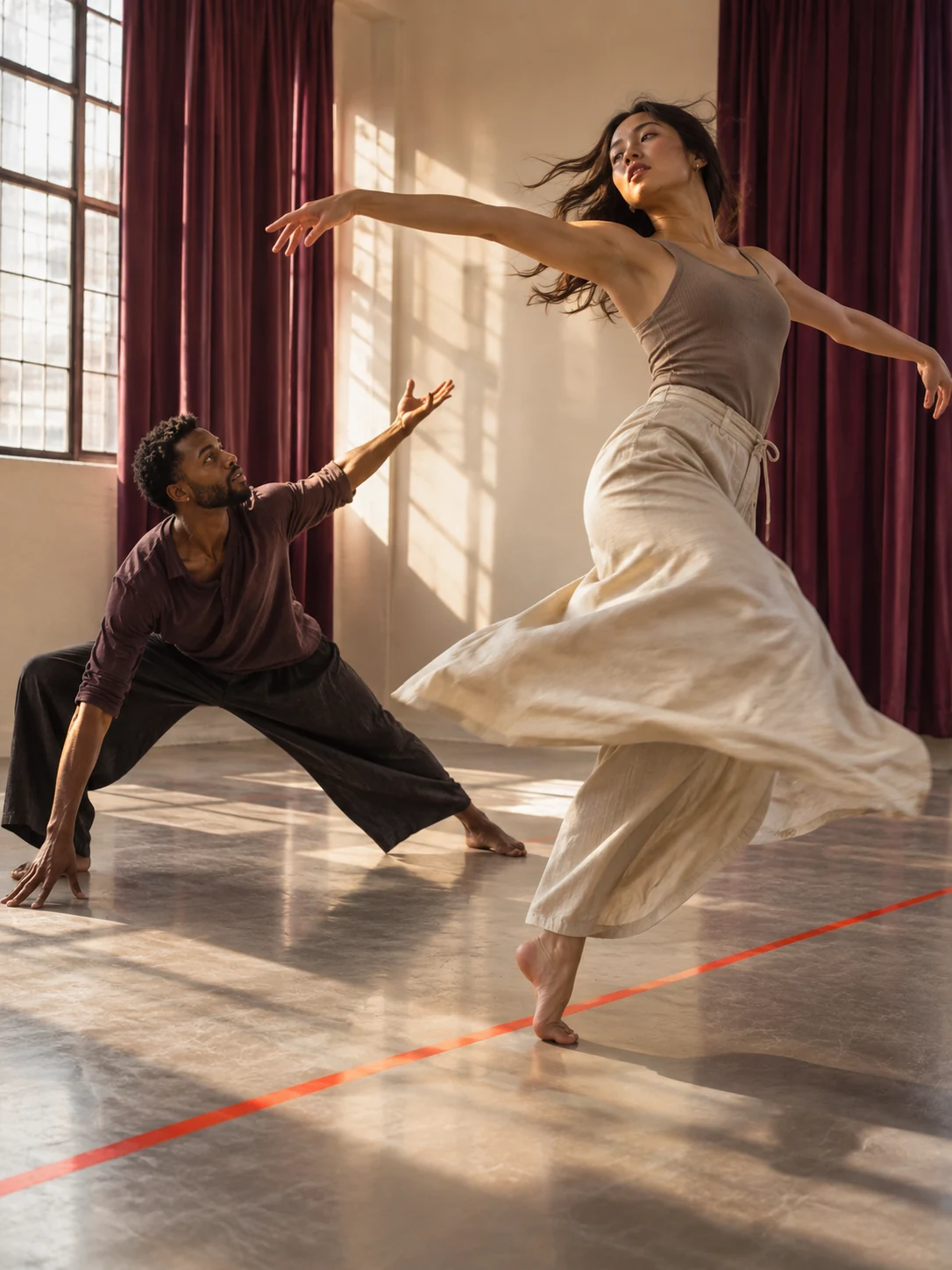
Floor as partner
Rolls, slides, and low transitions ask the hands and back to share load. Marking lightly before full speed keeps shoulders from bracing.
Building a phrase
Start with a motif — a hop, a reach, a turn — then vary facings, levels, and rhythm. Repeating with small edits teaches memory better than adding unrelated steps.
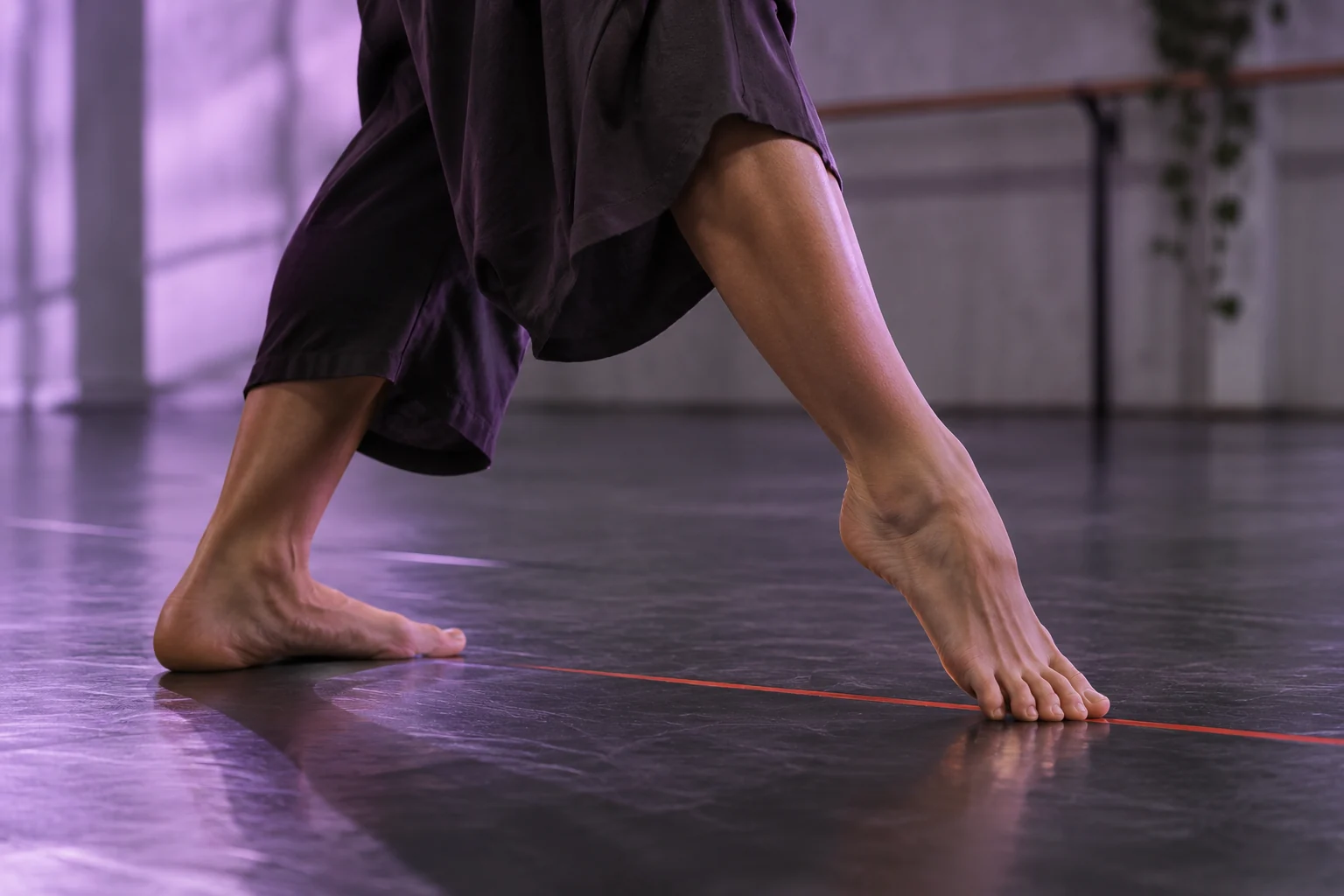
Space between dancers
Contemporary ensembles need shared pulse and personal bubble. Practicing in loose lines before tight unison clarifies who travels when.
Back to pathways