Count in eight
Find your phrase in the measure
Movement education framed around rhythm, spatial awareness, and the qualities each style asks for — vocabulary you can read before you step on the floor.
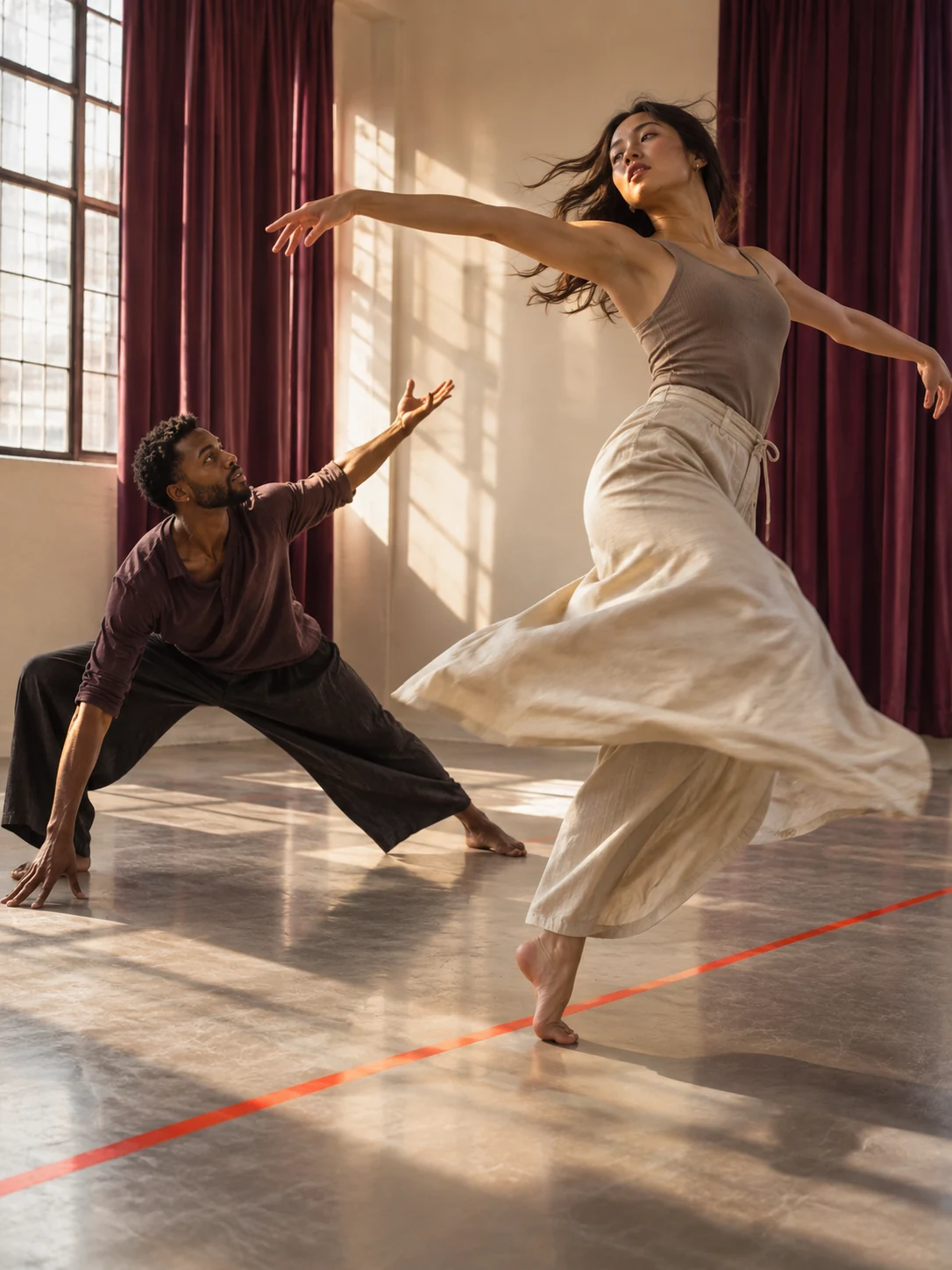
Weight shifts read in the legs first — then the torso answers, and the phrase finds its downbeat.
Style pathways
Choose a lens on movement
Ballet
Barre lines, center patterns, and port de bras in approachable language.
Contemporary
Floor, space, direction, and how phrases unfold across the room.
Hip-hop
Groove, isolations, weight shifts, and respectful cultural context.
Jazz & tap
Turns, accents, and the sound-foot relationship in tap.
Rhythm before steps
Counting is a map, not a cage — it tells you where weight lands and when the room breathes between phrases.
Listen for the downbeat
The first beat of a measure often carries arrival. Noticing where music stresses helps feet, hands, and gaze line up without rushing the next transition.
Mark the floor
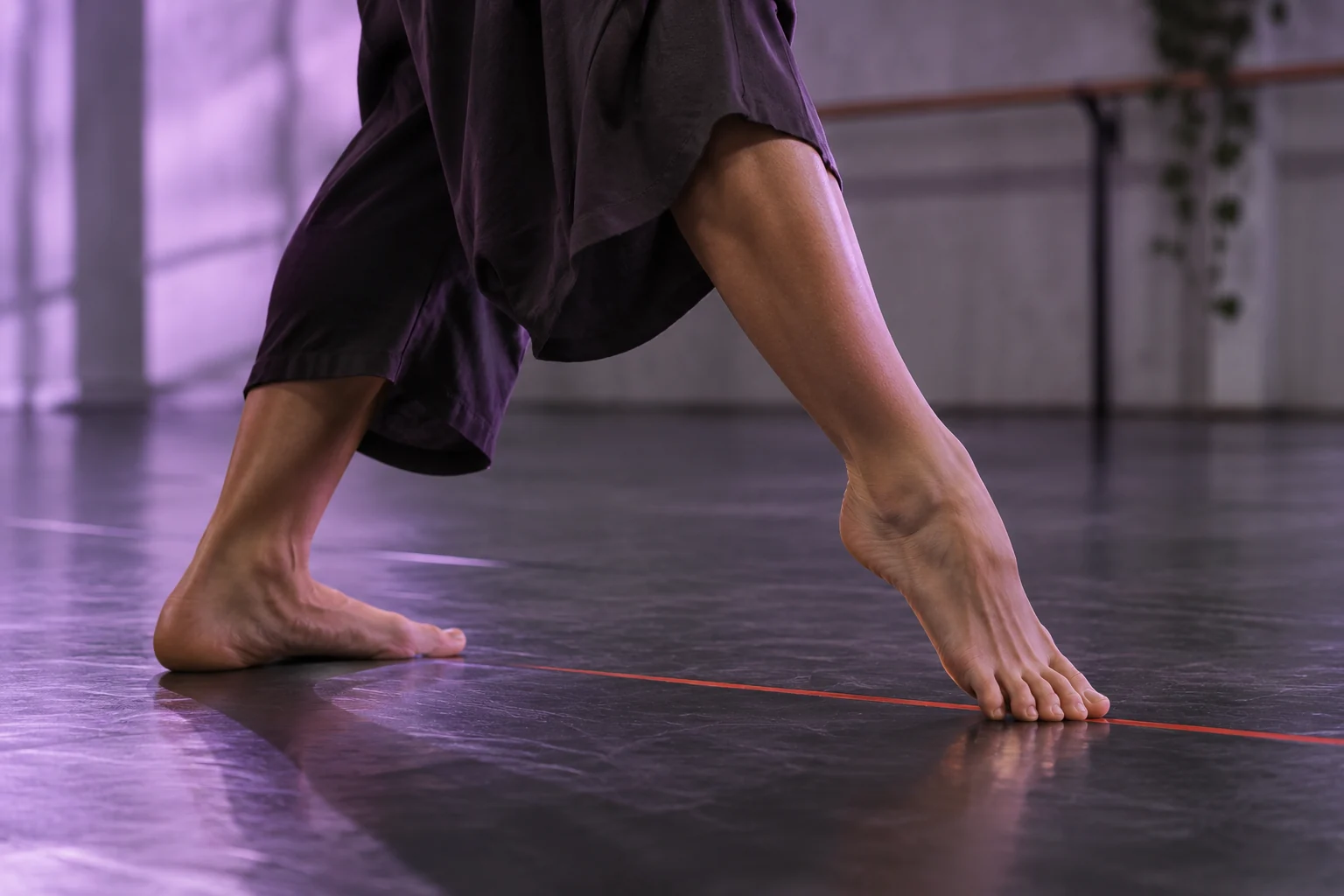
Small steps in place reveal how you transfer weight before traveling. The dark studio floor in the photo below shows feet finding a clear mark — heel, ball, or flat.
Shared ground
What every style shares
Before style-specific steps, dancers share musicality, alignment, spacing, and rest — ideas that travel across ballet, jazz, hip-hop, and tap.
Musicality
- Layers — Melody, bass, and percussion offer different places to put accent.
- Syncopation — Moving between beats stretches phrasing.
- Silence — Holding still on count seven can make count eight explode.
Alignment, warm-up, rest
Stack knee over toe in plié, keep ribs soft over hips, let neck follow gaze. Gradual pulse rise and small traveling steps prepare for bigger shapes; rest and water belong in the architecture of a session.
Group spacing
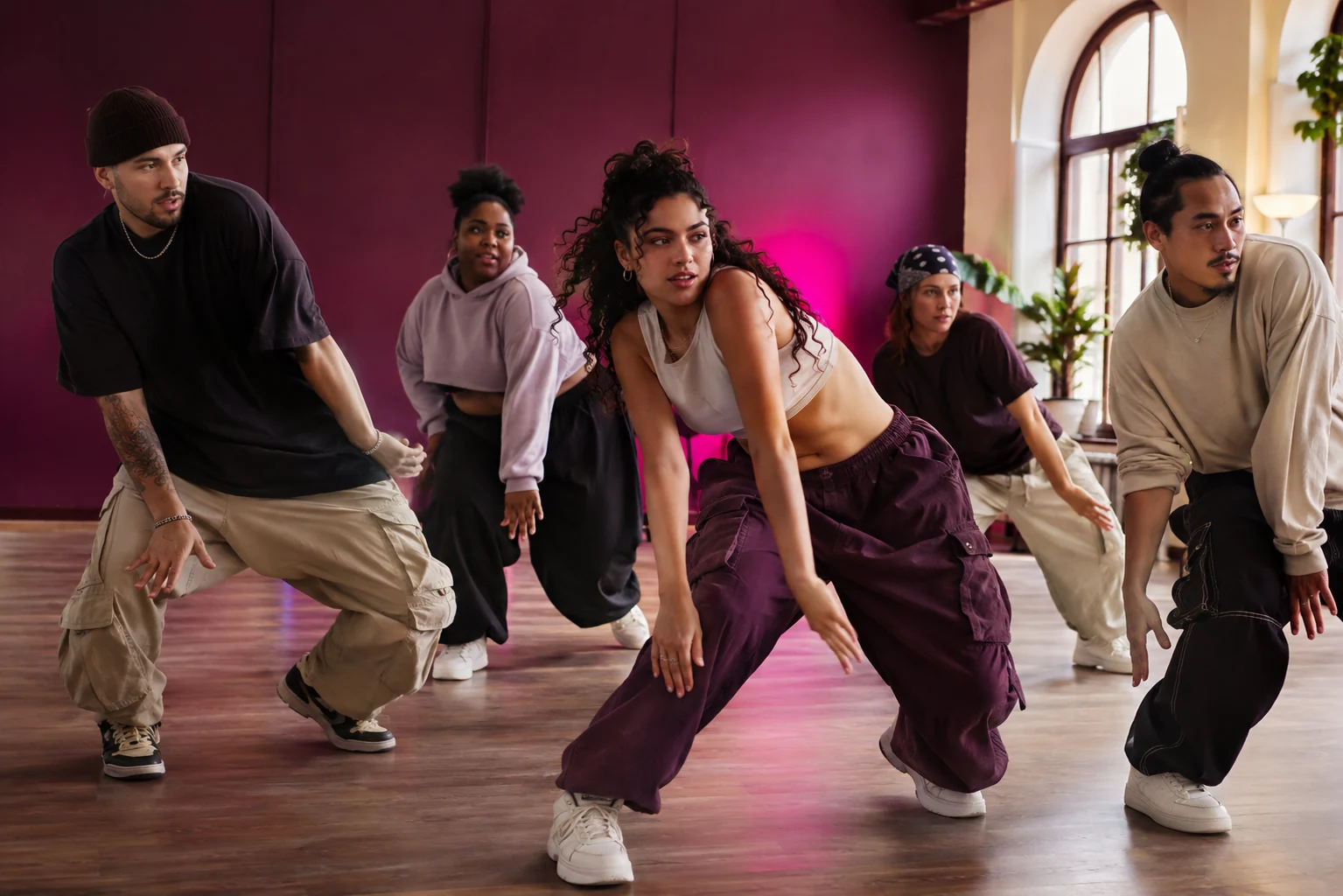
Ensemble work asks everyone to read the same pulse while leaving air between bodies. Grounded hip-hop shapes in the image show shared timing without crowding the center.
Ways to begin.
- Young dancers — curiosity, listening, and rhythm with a steady adult presence nearby.
- Adult beginners — returning to dance or learning the foundations of a new style.
- Questions — Contact & FAQ for choosing a style and exploring movement basics.